
Cat Behaviour
How to Actually Play With Your Cat
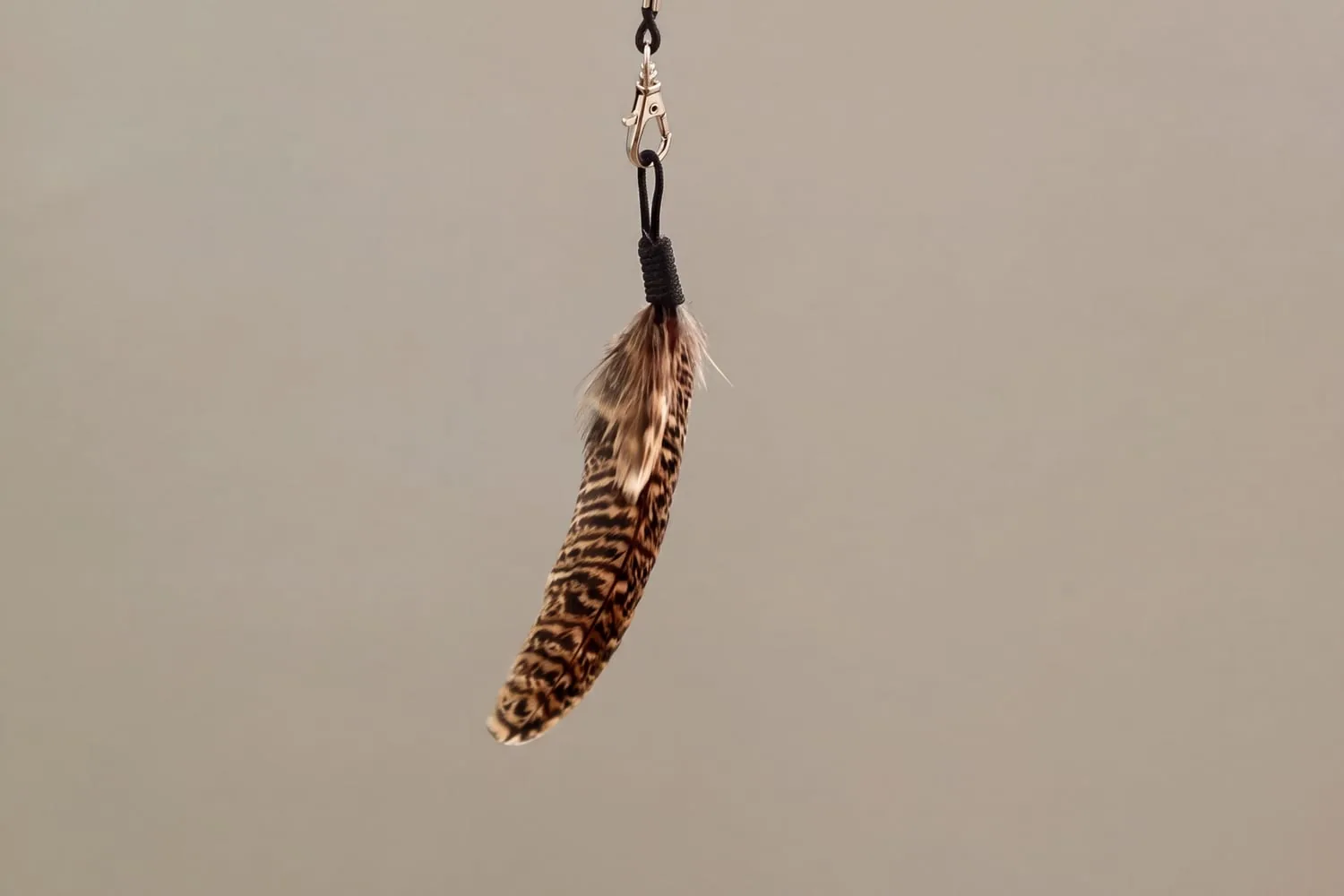
Most cat owners wave a toy around randomly, wonder why their cat loses interest after thirty seconds, and conclude that their cat just isn't playful. The cat isn't the problem. The technique is.
Cats don't play the way dogs play. A dog will chase a ball until it collapses. A cat is running a hunting simulation, and if the prey doesn't behave like prey, the simulation breaks.
The hunt-catch-kill cycle
Every predatory interaction your cat has - real or simulated - follows the same four-stage sequence: stare, stalk, pounce, kill.
Watch any cat spot a bird through a window. First, the locked gaze. Then the low crouch and slow advance. Then the explosive burst. Then the bite. This isn't learned behaviour. It's hardwired. Research published in Current Biology (Cecchetti et al., 2021) found that even well-fed domestic cats maintain active hunting behaviours, and that daily interactive play reduced actual wildlife hunting by 25%. The instinct doesn't switch off because the food bowl is full. Play is the outlet.
When you play with a wand toy, you're the prey's puppeteer. Your job is to make the attachment behave like something worth hunting.
What most people get wrong
Moving the toy towards the cat. Prey doesn't walk towards its predator. Move the attachment away from your cat - along the ground, around a corner, behind a cushion. The chase is the point.
Keeping the toy in the air the whole time. Some cats are air hunters (they prefer leaping at flying things), but most domestic cats are ground hunters. A feather skittering across the floor mimics a ground bird or a mouse far more realistically than one hovering overhead. Try both and watch which triggers a stronger stalk response.
Never letting the cat catch it. This is the big one. If your cat never catches the prey, they'll eventually disengage. Frustration isn't enrichment. Let them catch it regularly - roughly every 30 to 60 seconds during active play. Let them grab it, wrestle with it, deliver the kill bite. Then gently pull it free and start the sequence again.
Ending the session abruptly. Yanking the toy away while your cat is still aroused leaves them frustrated and wired. Wind the session down gradually. Slow the prey's movements, let it "die" (go limp), and follow the final catch with a small treat or meal. This completes the hunt-eat-rest cycle that mirrors natural behaviour.
How long and how often
Research from the University of Adelaide (Henning et al., 2022) studied how cats and their people actually play together, and linked more daily play with better cat welfare and a closer bond. The American Animal Hospital Association recommends two to three sessions of 10 to 15 minutes per day.
That said, quality matters more than duration. Five minutes of engaged, well-structured play where your cat is genuinely stalking and pouncing is worth more than twenty minutes of distracted waving.
Cats are crepuscular - meaning they're most active at dawn and dusk. Scheduling play sessions around these windows aligns with their natural rhythm and can reduce the midnight zoomies that wake you up.
Rotation and novelty
A 2019 review in Applied Animal Behaviour Science found that toy size, similarity to prey, and novelty are all predictors of a cat's play response. Cats habituate to familiar toys. The same feather every day loses its appeal.
This is why modular wand systems work. Swapping between different attachment types resets the novelty response without needing an entirely new toy.
The Chaser ships with The Wren, a natural feather attachment. Future attachment drops are planned to add variety - so the wand stays the same but the prey keeps changing.
The real benefit
Research into cat-guardian relationships consistently finds that regular interactive play correlates with closer bonds, fewer problem behaviours, and higher quality of life scores for the cat.
Playing with your cat isn't just enrichment for them. It's how you build the relationship.